|
Getting your Trinity Audio player ready...
|
The Planet Is Whispering—But 2026 May Be the Year It Starts Shouting
The warnings are no longer subtle. Across continents, oceans, and ecosystems, Earth is sending clearer signals that its balance is shifting—and fast. As 2026 unfolds, scientists and institutions like the United Nations University are highlighting key environmental flashpoints that could define not just the year ahead, but the trajectory of the coming decades.
These are not distant risks. They are unfolding in real time, shaping economies, ecosystems, and the stability of life as we know it.
1. Climate Tipping Points Are Getting Closer
From the thawing Arctic to drying rainforests, scientists are increasingly concerned about tipping points—thresholds beyond which environmental systems shift irreversibly.
The Intergovernmental Panel on Climate Change has repeatedly warned that exceeding certain temperature limits could trigger cascading effects: collapsing ice sheets, disrupted ocean currents, and large-scale ecosystem die-offs.
In 2026, the focus intensifies on whether global warming will push systems like the Amazon rainforest or Greenland ice sheet past these critical thresholds. Once crossed, recovery may be impossible within human timescales.
2. Water Stress Is Becoming a Global Crisis
Water—once considered abundant—is rapidly becoming one of the planet’s most contested resources.
Regions across Africa, Asia, and even parts of Europe are facing increasing water stress, driven by rising temperatures, population growth, and mismanagement. According to the World Health Organization, billions could face water shortages in the coming decades.
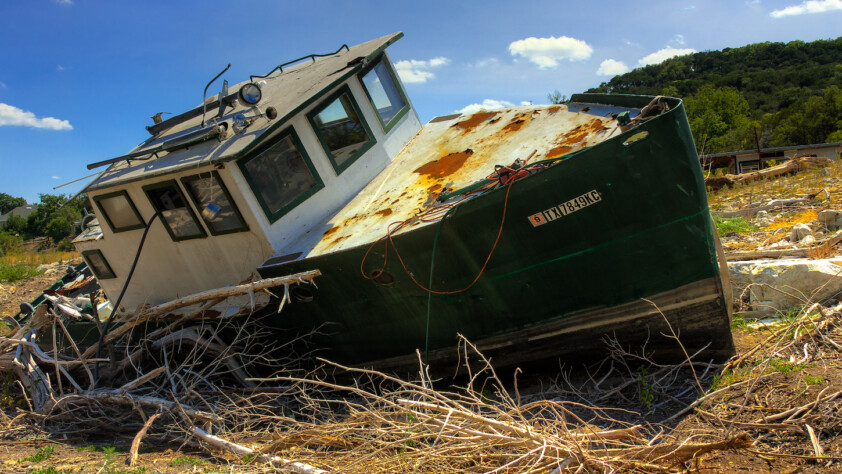
In 2026, the intersection of climate change and water scarcity is expected to intensify geopolitical tensions, disrupt agriculture, and increase the risk of humanitarian crises.
3. Biodiversity Loss Is Accelerating Beyond Recovery
The planet is undergoing what many scientists call the sixth mass extinction.
Reports from the International Union for Conservation of Nature show that species are disappearing at rates tens to hundreds of times faster than natural background levels. From coral reefs to pollinators, ecosystems are weakening—and with them, the services that sustain human life.
In 2026, the critical question is no longer whether biodiversity loss is happening, but whether conservation efforts can scale fast enough to prevent systemic collapse.
4. Climate Adaptation Is Becoming as Urgent as Mitigation
For decades, the global focus has been on reducing emissions. But as impacts intensify, adaptation is moving to the forefront.
Cities are investing in flood defenses, nations are redesigning infrastructure, and farmers are shifting crops to survive new climate realities. The United Nations Environment Programme warns that adaptation gaps—especially in developing countries—remain dangerously wide.
In 2026, the divide between regions that can adapt and those that cannot may become one of the defining environmental justice issues of our time.
5. The Energy Transition Faces a Reality Check
The shift to renewable energy is accelerating—but not without challenges.
While solar, wind, and electric vehicles continue to expand, concerns are growing around resource extraction, grid stability, and political resistance. Critical minerals like lithium and cobalt—essential for batteries—bring their own environmental and ethical dilemmas.
Institutions such as the International Energy Agency stress that without careful planning, the energy transition could replicate some of the very problems it aims to solve.
The Bigger Picture: A Decade That Will Define Centuries
What ties these five trends together is not just urgency—but interconnection.
Water scarcity fuels conflict. Biodiversity loss weakens climate resilience. Energy transitions reshape economies. And tipping points, once crossed, amplify every other risk.
2026 is not just another year in the climate timeline—it is a checkpoint. A moment where the cumulative weight of past inaction meets the narrowing window for meaningful change.
The question is no longer whether the planet is changing.
It’s whether humanity can change fast enough in response.
Sources and References
- United Nations University – 5 Things to Watch in Climate and Environment in 2026
- Intergovernmental Panel on Climate Change – Assessment Reports on Climate Tipping Points
- World Health Organization – Global Water Scarcity and Health Reports
- International Union for Conservation of Nature – Red List of Threatened Species
- United Nations Environment Programme – Adaptation Gap Report
- International Energy Agency – World Energy Outlook