|
Getting your Trinity Audio player ready...
|
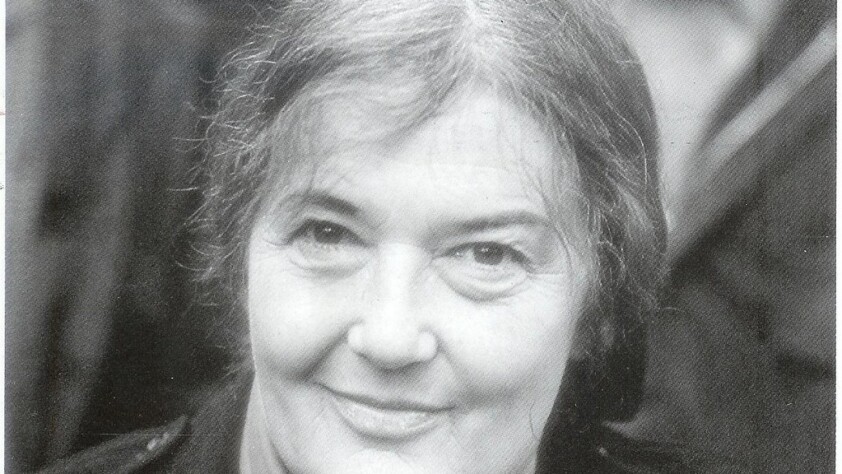
On 1 October 2025, the world lost one of its most beloved and transformative voices for wildlife, conservation, and the planet’s future: Jane Goodall. At age 91, she passed away peacefully — still traveling, still speaking, still inspiring. The announcement from her namesake organization was greeted with global mourning, but also with resolve: to carry forward the mission she dedicated her life to.
Ref: Jane Goodall’s Good for All News
In a world grappling with environmental crises, loss of biodiversity, and growing disconnection from the natural world, Goodall leaves behind a legacy that is as much a source of sorrow as of determination. Through her work — scientific, humanitarian, and educational — she redefined how we understand other species — and how we must treat them.
From Gombe to Global: Her Scientific Revolution
Goodall’s journey into the wilds of Africa began in 1960, when she started observing wild chimpanzees in what is now the Gombe Stream National Park in Tanzania. Her work would forever change science’s understanding of our closest living relatives. (wikipedia)
Breaking the rules — and changing minds
Before Goodall, the prevailing view was that humans held a unique claim to complex social behaviour, tool use, and emotional lives. Goodall challenged this. She documented chimpanzees using tools, socialising in ways once considered “human-only,” exhibiting distinct personalities, forming familial bonds, and even showing aggression. (nature.com)
As the scientific community later confirmed genetically, chimpanzees, bonobos and humans share a closer relationship with each other than with other great apes, underscoring the importance of Goodall’s observations in mapping the evolutionary and emotional continuum among primates. (nature.com)
“Her discoveries as an ethologist revolutionized science.” (abcnews)
Her findings forced humanity to confront uncomfortable questions about what it means to be human — and about our moral responsibility to other beings. In challenging the idea of human exceptionalism, she opened the door to deeper conversations about animal welfare, cognition, and conservation.
A path for women in science
Goodall’s success also broke barriers. In a field long dominated by men, her tenacity, insight and empathy helped pave the way for future generations of women scientists. Her story inspired countless young researchers — particularly women — to pursue careers not only in primatology, but also in broader ecological and conservation sciences. Many of today’s leading primatologists and conservationists trace their passion back to watching Goodall’s work. (nature.com)
From Discovery to Advocacy — Building Institutions That Last
Goodall understood that observation alone was not enough. If we are to safeguard the natural world, science must be paired with action. Over decades, she transformed from primatologist to global advocate.
The founding of a movement
In 1977 she established the Jane Goodall Institute (JGI), creating a formal structure to protect chimpanzees, preserve their habitats, and promote compassionate coexistence between humans and other species. (darwin.cam.ac.uk)
Under the JGI’s umbrella, sanctuaries such as the Tchimpounga Sanctuary in the Republic of the Congo provide refuge to orphaned and rescued chimpanzees — giving them a second chance at life and dignity. (wikipedia)
But Goodall wanted to go further than sanctuary — she wanted change.
Engaging youth: the power of Roots & Shoots
In 1991, Goodall gathered a group of Tanzanian students and, over conversation, planted the seed of a worldwide movement: Roots & Shoots. What started with a handful of local youths around her kitchen table blossomed into a global network that now spans more than 75 countries. (janegoodall.org.uk)
Roots & Shoots empowers young people — from kindergarten to university, in schools, communities, and youth groups — to take action on issues they care about: caring for animals, protecting the environment, serving communities. It teaches them that “every individual can make a difference.” (janegoodall.org.uk)
In 2023 alone, the program recorded over 700,000 hours of service from more than a million participants worldwide. (janegoodall.ca)
Through JGI and Roots & Shoots, Goodall institutionalised her belief that conservation must be rooted in compassion, community, and education — and that change must come from the ground up.
A Voice for the Planet — Advocacy, Education, and Hope
Science gave Goodall credibility. But it was her voice — relentless, empathetic, hopeful — that turned research into a movement, and a movement into a global conscience.
She spent decades speaking around the world — to governments, policymakers, students, communities — warning about the threats facing wildlife, climate change, deforestation, habitat loss, and cruelty to animals. Long after her early fieldwork, she remained a tireless advocate. At 91, she was still on the road, still speaking. (abcnews)
As noted by the UNESCO and her many supporters, her life was “a remarkable example of courage and conviction.” (unesco.org.uk)
“We need to collaborate, we need to get together, we need countries and individuals to work together to make this a better world so that we can be a little bit proud of what we leave for our children.” — Jane Goodall, Speech for History, UNESCO, 2024 Ref: unesco.org.uk
She reminded us repeatedly: hope is not passive. It is a call to action.
Even as biodiversity declines and climate disasters accelerate, Goodall never succumbed to despair. She believed in human potential — in empathy, in education, in small acts making big change. Her message was simple, persistent: “Every individual can make a difference.”
(janegoodall.global)
A Legacy of Hope — What We Carry Forward
With Goodall gone, the world faces a deep void — but also a clear path forward. Her legacy endures, not just in scientific papers or conservation programs, but in young people planting trees, cleaning rivers, raising awareness, volunteering, fighting for justice.
Global reach, local roots
Whether through sanctuaries in Africa, youth groups in schools across continents, or community-led conservation projects in towns and cities — her institutions remain active, vibrant, and growing. The movement she seeded continues to flourish. (janegoodall.global)
In her final years, Goodall saw a world grappling with environmental chaos — but she never lost faith that collective action could change the course. As she said, hope was not optional.
“Yes, there is hope … It’s in our hands, it’s in your hands and my hands and those of our children.” (reuters)
Today, that hope is carried by millions: scientists, activists, students, everyday citizens — united by a vision of a more compassionate, sustainable world.
More than an obituary — a charge to continue
Goodall’s passing reminds us that environmental and animal-rights advocacy is not static. It’s living, breathing work that must be renewed, reshaped, and re-energised by each generation.
In commemorations worldwide — from local community events to global institutions — people are not only mourning. They are pledging to continue: to restore habitats, advocate for animals, plant trees, reduce waste, educate others, and stand up for a world where humans live in respect, not dominance.
As the world reflects on her life, one message stands out: her greatest legacy might not be studies or organisations — but the sense of possibility she inspired. The conviction that every one of us, wherever we are, can make a difference.
In Memoriam — A Life Well Lived
Jane Goodall’s life reminds us that progress — scientific, moral, environmental — is often slow, often resisted, sometimes heartbreaking. But through empathy, perseverance, and unwavering hope, change is possible — and often inevitable.
Her contributions transformed our understanding of what it means to be human. But more importantly, they challenged us to ask: How will we treat those who share this planet with us?
The world has lost a giant. But her roots are deep; her shoots — young people around the world — will continue to grow.
Rest in peace, Jane Goodall. May your spirit of compassion, curiosity and hope live on.
Further reading on Jane Goodall’s legacy:
Wildlife advocate and primate expert Jane Goodall dies at 91
Goodall’s influence spread far and wide. Those who felt it are pledging to continue her work
How Jane Goodall shaped generations of science and conservation in Africa