|
Getting your Trinity Audio player ready...
|
Coral reefs, often called the “rainforests of the sea,” are among the most vibrant and vital ecosystems on Earth. They support an estimated 25% of all marine species, provide food for millions of people, and protect coastlines from erosion. Yet, these underwater treasures are facing an unprecedented threat: mass coral bleaching, driven largely by climate change.
What Is Coral Bleaching?
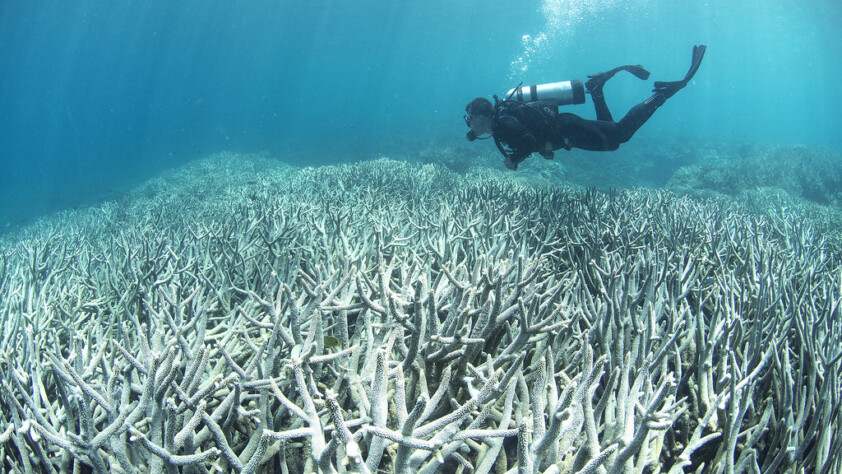
Coral bleaching occurs when corals, stressed by rising water temperatures, expel the symbiotic algae (zooxanthellae) that give them their colour and energy. Without these algae, corals turn stark white and, if stressful conditions persist, they can die.
In recent years, bleaching events have become more frequent and severe, leaving large swathes of reef ecosystems devastated. The Great Barrier Reef, for example, has suffered four major bleaching events in the past seven years alone, with some areas losing more than 50% of their coral cover.
The Role of Climate Change
Global warming is the primary driver of coral bleaching. Oceans have absorbed more than 90% of the excess heat generated by human-induced climate change, pushing water temperatures beyond the tolerance of many coral species.
Other factors, such as ocean acidification, pollution, and overfishing, exacerbate the stress on coral reefs. Together, these threats are creating a “perfect storm” that could render some reefs unrecognizable within decades.
Ecosystem and Human Impacts
The consequences of coral bleaching extend far beyond the reefs themselves:
- Biodiversity loss: Bleached reefs can no longer sustain the diverse marine life that depends on them, threatening fish, crustaceans, and countless other species.
- Fisheries collapse: Millions of people rely on reef ecosystems for food and livelihoods. A decline in reef health directly affects global food security.
- Coastal protection: Healthy reefs buffer coastlines from storm surges and erosion. Their decline leaves communities more vulnerable to natural disasters.
- Tourism decline: Coral reefs attract millions of tourists yearly. Bleaching reduces their aesthetic and economic value, impacting local economies.
Can We Reverse the Damage?
Some interventions offer hope. Scientists are exploring coral gardening and reef restoration, selectively breeding heat-tolerant coral species and replanting them on vulnerable reefs. Protecting reef areas from local stressors, such as overfishing and pollution, can also improve resilience.
However, experts warn that local actions alone will not suffice. Without global efforts to reduce greenhouse gas emissions and limit warming to 1.5 °C above pre-industrial levels, coral bleaching will continue unabated.
A Call to Action
The coral bleaching crisis is a stark reminder that climate change is not a distant problem—it is happening now, under our oceans. Protecting coral reefs requires urgent action at every level: global, national, and individual. From cutting carbon emissions to supporting reef conservation initiatives, every effort counts in giving these ecosystems a fighting chance.
The future of our oceans, and the countless lives they sustain, depends on how seriously we take this crisis today.
References & Further Reading
- Global Awareness Initiative: Sylvia Earle and the Global Movement to Conserve the Ocean
- NOAA Coral Reef Watch
- Hughes, T.P., et al. (2018). Global warming transforms coral reef assemblages. Nature.
- Great Barrier Reef Marine Park Authority