|
Getting your Trinity Audio player ready...
|
A Quiet Omission with Loud Consequences
At a moment when the climate crisis demands clarity, urgency, and global unity, a striking silence has emerged at the heart of international finance discussions. According to reporting from The Guardian, references to climate change have been deliberately avoided or softened during key global finance talks—an absence that many experts are calling not just unusual, but dangerous.
This shift, reportedly influenced by political pressure linked to Donald Trump and his policy stance, signals more than a diplomatic adjustment. It reflects a deeper fracture in how the world’s most powerful economies are willing—or unwilling—to confront environmental reality.
Climate Erased from the Conversation
Behind closed doors, negotiators have reportedly been instructed to avoid explicit mention of “climate change” in official communiqués. Instead, vague language such as “economic resilience” or “sustainability” is being used—terms that, while related, lack the specificity needed to drive meaningful climate action.
Institutions like the International Monetary Fund and World Bank have historically played critical roles in shaping climate finance, funding adaptation strategies, and supporting vulnerable nations. Yet even within these organisations, the tone appears to be shifting.
The result is a growing concern: if climate change cannot be named, can it truly be addressed?
The Politics Behind the Silence
This development is not occurring in a vacuum. It reflects a broader resurgence of climate skepticism and political resistance to environmental regulation, particularly from influential economies.
Under the influence of figures like Donald Trump, climate policy is increasingly framed as a constraint on economic growth rather than a necessary transformation. This perspective challenges the consensus built over decades, including landmark agreements such as the Paris Agreement.
By removing climate language from financial discourse, governments risk weakening the accountability mechanisms that underpin global cooperation. Without clear commitments, funding pledges become ambiguous, timelines stretch, and urgency fades.
Environmental Impact: More Than Just Words
The implications of this silence extend far beyond diplomacy. Climate change is not a theoretical debate—it is a measurable, accelerating crisis.
- Rising global temperatures are intensifying extreme weather events
- Coastal communities face increasing flood risks
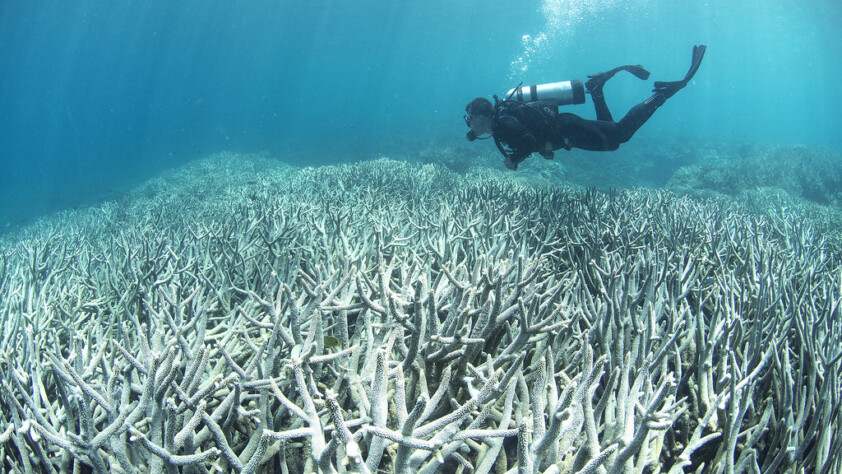
- Ecosystems are collapsing under pressure from heat and habitat loss
When climate is sidelined in financial discussions, the flow of funding for mitigation and adaptation is directly affected. Developing nations, already on the frontlines of climate impacts, may find themselves with fewer resources and less international support.
In essence, the absence of climate language today could translate into real-world consequences tomorrow.
A Dangerous Precedent for Global Cooperation
International climate progress has always depended on shared language and shared goals. From COP summits to multilateral agreements, the ability to name the problem has been the first step toward solving it.
If major economies begin to dilute or avoid climate commitments, it risks triggering a domino effect—where other nations follow suit, weakening global ambition at a time when it should be accelerating.
Organizations like the United Nations have repeatedly warned that the window for limiting global warming is rapidly closing. Political hesitation now could lock in irreversible environmental damage for decades to come.
The Bigger Question: Strategy or Smoke Screen?
There is an emerging concern that this shift may not just be political caution, but strategic deflection. By reframing climate discussions in less direct terms, governments can appear engaged while avoiding binding commitments.
This raises a critical question for the future of environmental policy:
Is climate being quietly deprioritized in favour of short-term economic narratives?
Or worse—has it become a topic too politically sensitive to confront at the highest levels of global decision-making?
Conclusion: Silence is Not Neutral
In the context of the climate crisis, silence is not passive—it is active. It shapes priorities, influences funding, and determines the pace of action.
The reported omission of climate language at global finance talks is more than a semantic issue. It is a signal of shifting political will, one that could redefine the trajectory of international climate efforts.
At a time when the science is clearer than ever, the world cannot afford ambiguity. Because if climate disappears from the conversation, it risks disappearing from the agenda—and that is a cost the planet cannot bear.
Sources & References
- The Guardian – “Don’t mention the climate: Trump creates ‘beyond absurd’ situation at global finance talks” (2026)
- International Monetary Fund – Climate and Economic Stability Reports
- World Bank – Climate Finance Overview
- United Nations – IPCC and Climate Policy Briefings
- Paris Agreement – UNFCCC Documentation